
When: Thursday, 22 October, 1:00 pm AEST
Where: This seminar will be presented at the ACFR seminar area, J04, Level 2 (Rose St Building) and partially online via Zoom. RSVP
Title: Vision-Based Navigation from Lunar Mapping to Close-Proximity Operations
Speaker: Dr Sofia McLeod
Abstract:
Spacecraft operating far from Earth cannot rely on GPS, and increasingly they cannot rely on constant human oversight or real-time intervention either. Cameras offer a lightweight, passive way to determine where a spacecraft is and how it is moving, but space imposes demanding conditions: harsh and rapidly changing illumination, limited onboard compute and power, and almost no opportunity to collect real training data.
This talk presents my work on vision-based pose and motion estimation for spacecraft, spanning my PhD research and my current postdoctoral work. I will begin with STELLA, an end-to-end crater-based navigation (CBN) pipeline for long-duration lunar mapping missions. STELLA integrates crater detection, crater identification, and crater-based pose estimation with a batch orbit determination back end, and was evaluated on CRESENT-365, a synthetic dataset simulating a year-long lunar mapping mission. The results constitute the first comprehensive assessment of CBN in a true lunar mapping setting, and inform the operational conditions that should be considered for future missions.
The second part of the talk turns to event cameras, bio-inspired sensors that offer low power consumption, high temporal resolution, and high dynamic range. I will describe an event-based, bio-inspired landing algorithm developed in collaboration with researchers at the European Space Agency. I will then present my current work on event-based spacecraft pose estimation for rendezvous and proximity operations (RPO). Event cameras are often presented as a complement to conventional cameras for fast motion, yet the realistic RPO scenario involves very slow relative motion, producing sparse events that challenge existing methods. I will show how we designed an event-based approach specifically for this low-motion, sparse-event scenario.
Along the way, I will share some reflections from working on real space missions, approaches to data collection, including Adelaide University’s Cloud-based Orbital Robotics Laboratory, and a period of research in Japan.
Bio:
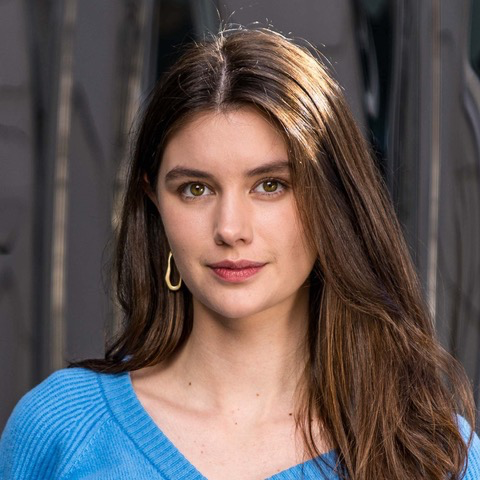
Dr Sofia McLeod is a postdoctoral researcher at the Australian Institute for Machine Learning (AIML), Adelaide University, supervised by Prof. Tat-Jun Chin. Her PhD thesis, Vision-Based Pose and Motion Estimation for Planetary Missions, and ongoing research focus on spacecraft navigation using vision-based methods that remain reliable in the demanding conditions of space.
Sofia has been the primary researcher on the optical navigation systems for two space missions, developed STELLA, an end-to-end crater-based lunar navigation pipeline, and built perception algorithms for a spacecraft payload centred on event-based sensing. Her research spans classical computer vision through to deep learning, with particular interests in 3D geometry, event and RGB cameras, and real and synthetic data generation. She has been involved in close collaboration with international industry partners, research institutions and space agencies across Europe and Japan.